Custom WordPress Themes vs Pre-Made Themes
Compare custom WordPress themes and pre-made templates, including design, performance, editing, cost and long-term flexibility.
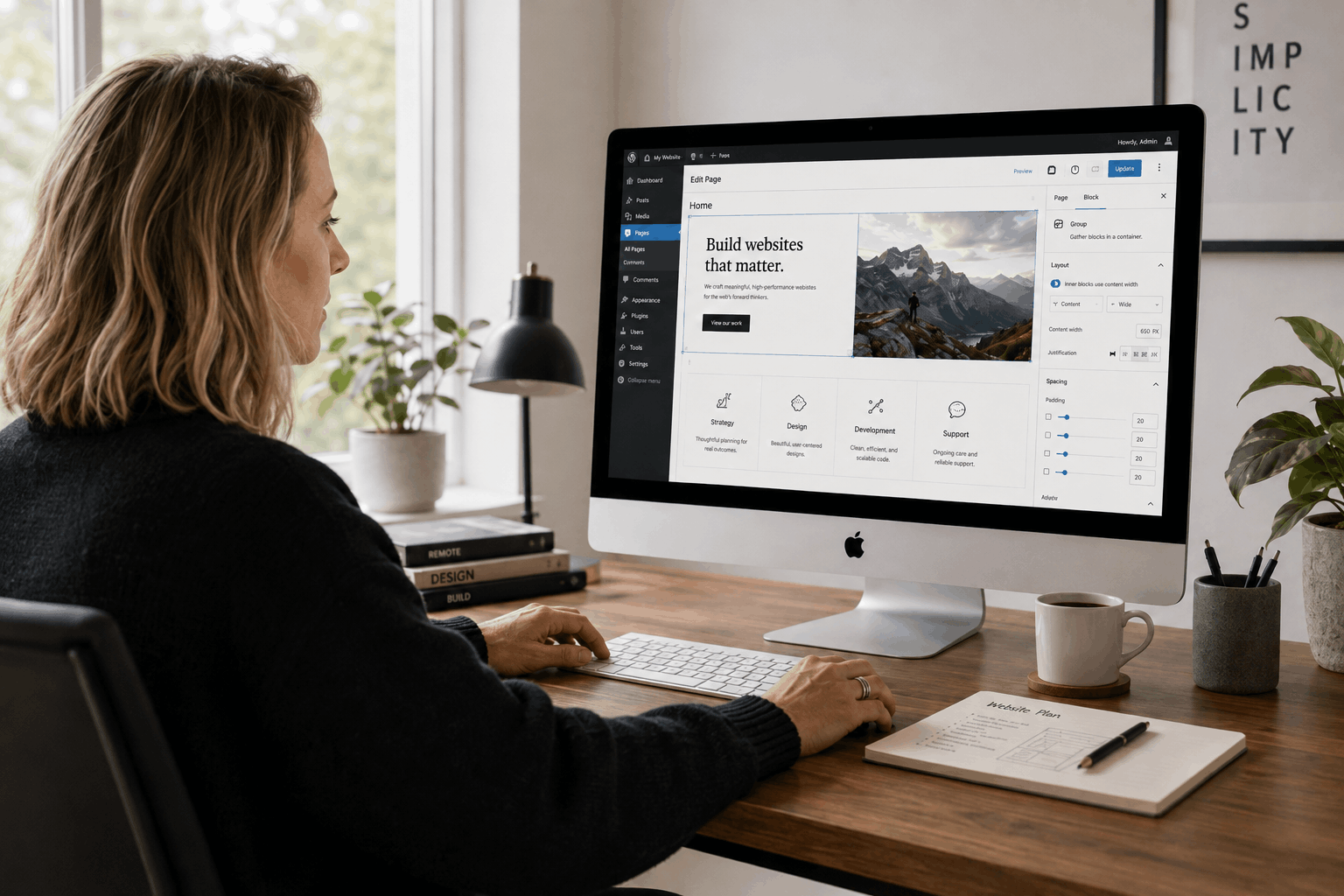
Which option is right for your website?
When planning a new WordPress website, one of the first decisions is whether to use a pre-made theme or invest in a custom build.
Both options can work well, but they suit different budgets, timescales and business needs. A small brochure site may not need the same level of flexibility as a membership platform, portfolio or content-heavy business website.
This guide explains the main differences between custom WordPress themes and pre-made templates, including design, performance, editing, cost and long-term value.
What is a pre-made WordPress theme?
A pre-made theme is an existing website design that can be installed and adapted.
It will usually include a set of layouts, typography options, colour controls and page-building features. Many themes also include demo content that can be imported and replaced with your own text and images.
This can make a pre-made theme a useful starting point for a simple website, particularly when the budget or timescale is limited.
However, the design and functionality are still based on a system created for a broad range of users rather than one specific business.

What is a custom WordPress theme?
A custom WordPress theme is designed and developed around the needs of one website.
The page structure, visual design, content blocks and editing tools are created specifically for the business, audience and content.
A custom build may include:
- original page designs
- tailored service or product layouts
- reusable content blocks
- custom post types
- flexible ACF fields
- bespoke search or filtering
- integrations with external platforms
- an editing experience designed around the client’s workflow
The goal is to create a website that contains what the business needs without relying on a large amount of unnecessary theme functionality.
When a pre-made theme can be a good choice
A pre-made theme may be suitable when:
- the website is relatively small
- the required pages are straightforward
- the budget is limited
- the launch date is short
- the content fits the available layouts
- a fully original design is not essential
For example, a small business that needs a homepage, services page, about page and contact form may be able to work effectively with a carefully selected theme.
The important part is choosing a theme that closely matches the actual project rather than selecting one because the demo site looks attractive.
The limitations of pre-made themes
Pre-made themes are designed to support many different types of website, which means they often include more features than one business will ever use.
This can lead to:
- unnecessary scripts and styles
- slower page loading
- more complicated editing screens
- reliance on several plugins
- layouts that are difficult to customise
- visual compromises
- additional work when the site needs to grow
A theme may appear inexpensive at the beginning, but significant customisation can quickly increase the cost.
There is also a risk of spending time working around the theme rather than creating the most appropriate solution for the website.
When a custom WordPress theme is worth considering
A custom theme is usually more appropriate when:
- the website is central to the business
- the brand needs a distinctive visual presence
- the content does not fit standard layouts
- the site requires custom functionality
- several people will manage the content
- performance is an important priority
- the website is expected to grow
- the user journey needs careful planning
A custom website provides more control over how information is structured and how users move through it.
This can be particularly useful for service businesses, agencies, creative portfolios, membership organisations, charities and companies with detailed product or resource areas.
Design flexibility
A pre-made theme begins with an existing design system.
You can usually change colours, fonts, imagery and some layout settings, but the underlying proportions and component structure remain largely the same.
A custom theme begins with the content and business goals.
The layout can be designed around:
- the services you offer
- your audience
- the calls to action
- the amount of content
- the type of imagery available
- your brand identity
- the way people need to use the site
This creates more freedom to build a website that feels specific to the business rather than adapted from a generic template.
Editing and content management
One of the main advantages of WordPress is that clients can manage content after launch.
However, the editing experience can vary significantly between themes.
Some pre-made themes offer a large number of controls, widgets and page-builder options. This can provide flexibility, but it can also make routine updates feel complicated.
A custom WordPress build can create a more focused editing experience.
For example, content tools can be designed specifically for common tasks such as:
- adding a new case study
- publishing a blog article
- updating a service page
- changing a testimonial
- adding a team member
- creating a landing page
- uploading a new resource
Using reusable blocks and custom fields helps preserve the design while still giving the client control over the content.
ACF and flexible content
Advanced Custom Fields, often referred to as ACF, is commonly used in custom WordPress development.
It allows developers to create tailored editing fields for different types of content.
Instead of presenting the editor with an empty page or a large selection of unrelated options, ACF can provide clear fields for items such as:
- project titles
- client names
- service lists
- testimonials
- image galleries
- calls to action
- downloadable files
- related content
Flexible content systems can also allow pages to be assembled from pre-designed blocks.
This creates a useful balance between flexibility and consistency. Clients can build varied layouts without having to make detailed design decisions every time they update the site.
Performance
Website performance depends on many factors, including hosting, image sizes, plugins, scripts and how the site has been developed.
Pre-made themes can still perform well, particularly when they are carefully chosen and configured. However, some contain a large amount of code designed to support features that the final website does not use.
A custom theme can be developed with a more focused codebase because it only needs to support the agreed functionality.
This does not automatically make every custom site fast, but it provides a stronger starting point for performance optimisation.
Plugins and functionality
Plugins are an important part of WordPress and can provide useful functionality for:
- contact forms
- SEO
- eCommerce
- memberships
- events
- security
- backups
- analytics
Using plugins is not necessarily a problem.
The more important questions are whether each plugin is needed, well maintained and suitable for the project.
A good WordPress build uses established plugins where they solve a problem effectively and custom development where a more specific solution is required.
Cost
A pre-made theme will usually have a lower initial cost because much of the design and functionality already exists.
The project may involve:
- selecting the theme
- installing it
- adjusting colours and typography
- configuring layouts
- adding content
- testing the finished site
A custom WordPress project includes more planning, design and development, so the initial investment is generally higher.
However, the lowest-cost starting option is not always the lowest-cost long-term option.
A poorly matched theme may require repeated customisation, additional plugins or a complete rebuild when the business outgrows it.
Timescales
A pre-made theme can often be launched more quickly when the content is ready and the required changes are limited.
A custom build takes longer because it usually includes:
- discovery and planning
- sitemap development
- wireframes
- visual design
- feedback and refinement
- custom development
- testing
- content population
- training
The additional time is used to create a website that is more closely aligned with the business.
Support and maintenance
Both custom and pre-made WordPress websites require ongoing maintenance.
This may include:
- WordPress updates
- plugin updates
- security monitoring
- backups
- browser testing
- performance checks
- content updates
With a pre-made theme, support may depend on the original theme developer continuing to maintain it.
A custom theme also needs to be maintained, but the code and functionality are usually more closely connected to the needs of the individual website.
Whichever route you choose, it is worth considering who will support the website after launch.
What about page builders?
Page builders such as Elementor, Divi and WPBakery are often used with pre-made WordPress themes.
They allow users to assemble pages visually and can be useful for certain projects.
However, page builders may also introduce:
- additional code
- more complicated editing
- inconsistent layouts
- reliance on a particular plugin
- difficulty changing systems later
That does not mean they should never be used. The right choice depends on the client, the required level of flexibility and who will manage the website.
For many custom projects, I prefer using tailored ACF blocks or native WordPress blocks because they provide useful flexibility while keeping the editing system more focused.
Which option is better for SEO?
A custom WordPress theme is not automatically better for search rankings, and using a pre-made theme does not prevent a website from performing well.
SEO depends on a much wider combination of factors, including:
- useful content
- clear page structure
- descriptive titles and headings
- internal linking
- page speed
- mobile usability
- technical setup
- backlinks
- ongoing content quality
The theme affects some of these areas, particularly performance, markup and content structure, but it is only one part of the overall picture.
The best option is the one that allows the website to be maintained, expanded and improved over time.
Questions to ask before choosing
Before deciding between a custom or pre-made WordPress theme, consider:
- What does the website need to achieve?
- How important is a distinctive design?
- How much content will the site contain?
- Will the structure need to grow?
- Are there any custom features or integrations?
- Who will update the content?
- How quickly does the website need to launch?
- What budget is available?
- How long is the site expected to remain in use?
The answers should guide the choice more than a general assumption that one route is always better.
A pre-made theme may be right when
A pre-made option may be the best choice when the website is straightforward, the content suits an existing layout and the main priority is launching quickly within a smaller budget.
It can also be useful as a temporary first website for a new business that is still testing its offer.
A custom theme may be right when
A custom theme may offer better value when the website needs to communicate a detailed service, reflect an established brand, support unique content or integrate with wider business systems.
It is also worth considering when the website will be used actively for marketing, lead generation, publishing, membership or sales.
Final thoughts
There is no single correct approach for every WordPress website.
A well-selected pre-made theme can provide a practical and affordable solution for a simple project. A custom WordPress theme offers more control over design, functionality and content management when the website has more specific requirements.
The most important step is to understand what the website needs to achieve before choosing the technology or theme.
Starting with the goals, audience and content makes it much easier to choose an approach that will remain useful as the business develops.
Need help choosing the right WordPress approach?
I design and develop custom WordPress websites and can also help assess whether an existing theme is suitable for a project.
A short review of your goals, content, required functionality and budget is usually enough to identify the most practical route.
Recommended reading
Why You Should Hire a Designer Instead of Using an AI Logo Generator
In today’s digital world, AI-powered logo generators promise quick and affordable branding with just a few clicks. While…
Dark Mode Design in 2025: Best Practices for Web and UI
Dark mode is no longer just a trend — it’s an expected feature. Here’s how to design it…

Krystal Hosting – Website Hosting Discount Code
Discount code for UK website hosting with excellent performance, support and values